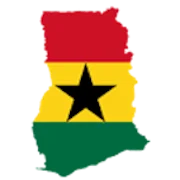
Ghana's Black Stars secured a goalless draw against England's Three Lions in their second Group L match of the 2026 FIFA World Cup at Boston Stadium on Tuesday, June 23, 2026. The Black Stars displayed a disciplined defensive performance, holding England despite their dominance in possession. While England struggled to create clear chances in the first half, Ghana showed more attacking intent in the second, threatening on counterattacks. England came close to scoring in the closing stages, with Nico O'Reilly's header hitting the crossbar and Marc Guéhi's late effort cleared off the line. This result gives Ghana four points from two matches, following their victory over Panama, and keeps them in contention for the knockout stages. England, who had previously beaten Croatia 4-2, will face Panama next, while Ghana will play Croatia in their final group game.
Free daily or weekly digest of the most important stories from across 18 African countries. No spam, unsubscribe any time.
This summary was AI-generated from a story originally published by GhanaWeb.

Joseph Ampadu, a Ghanaian solo traveler, aims to be the first person to drive a car across five continents: Africa, Europe, Asia, Australia, and North America. He has already made history by being the first from Africa to successfully tour North America with his vehicle. Ampadu's journey began in Accra, Ghana, and continued through Côte d’Ivoire, Mali, Senegal, Mauritania, and Morocco. From Morocco, he entered the European Union via Spain, driving through France, Monaco, Italy, and Austria. After his European tour, the G Wagon was shipped to North America, and his next destination is Australia, starting in Sydney. His ultimate goal is to cover 1,000,000 kilometers in his own car, touching all five continents.
Must ReadA recent study in Health Policy OPEN indicates that the United States' withdrawal from the World Health Organization WHO could significantly impact healthcare financing in Africa. The US contributed approximately 12–15 percent of the WHO's total funding between 2022 and 2023, including over $400 million in 2020, which supported efforts against infectious diseases, health system strengthening, and emergency responses. Africa's reliance on external funding makes it vulnerable to global health funding fluctuations, with potential threats to programs addressing HIV/AIDS, maternal and child health, tuberculosis, and malaria, particularly in low- and middle-income countries. The study warns that reduced WHO funding could shift the financial burden to individuals and households, increasing out-of-pocket spending and limiting access to essential services. It also noted that US funding was crucial for initiatives like COVAX for equitable vaccine access. However, the study also suggests that this challenge could encourage wider adoption of health insurance schemes and prompt African governments to strengthen domestic healthcare financing and invest in local pharmaceutical production. The United States formally completed its withdrawal from the WHO on January 22, 2026.

An exchange occurred in Parliament on June 23, 2026, between Minority Leader Alexander Kwamena Afenyo-Markin and Majority Leader Mahama Ayariga. Afenyo-Markin accused President John Dramani Mahama of discrimination for planning a meeting solely with members of the Majority Caucus. He argued that all 276 Members of Parliament deserve equal inclusion in discussions concerning welfare matters, questioning why the President would meet only one caucus and describing the move as unfair. In response, Ayariga defended the planned engagement, stating that during former President Nana Akufo-Addo’s tenure, neither he nor his colleagues on the Minority side at the time were invited to the Flagstaff House to discuss welfare issues. Ayariga emphasized that MPs’ conditions of service are determined by an established emoluments committee, not through direct meetings with the President, though he acknowledged that presidents do meet with the leadership of both sides of Parliament.